London Fashion Week 2026: key dates and the right space for your brand
If you are looking for the London Fashion Week 2026 dates, there are two key moments to keep on your radar: 19–23 February 2026 and 17–21 September 2026.
But for a brand, knowing the dates is only the first step.
The real question is usually something else: what kind of space do you need in London during Fashion Week? Some brands search for a pop-up store, others for a temporary showroom, others for an event venue or a space for a brand activation. That is exactly why London should be approached with a broader commercial lens: space + format + business objective.
That perspective fits especially well with the way Go—PopUp presents its London offer, combining pop-up stores in London and event venues in London.

London Fashion Week 2026 dates at a glance
These are the dates brands should use as their planning reference:
- London Fashion Week February 2026: Thursday 19 February to Monday 23 February 2026
- London Fashion Week September 2026: Thursday 17 September to Monday 21 September 2026
This matters because fashion week searches often surface outdated calendars or mixed information from previous years. For 2026, these are the two London windows brands should plan around. The live Spanish version published by Go—PopUp follows the same logic.
Why London Fashion Week matters for brands beyond the calendar
London does not work in the same way as Paris.
If Paris Fashion Week can be approached through four major moments across the year, London is much more concentrated. That concentration changes how brands should think about timing, visibility, space availability and commercial execution.

For many brands, London Fashion Week is not just about runway shows. It is a chance to:
- test the UK market
- increase visibility in one of Europe’s most commercially and culturally influential cities
- meet buyers, press and partners
- launch a new product or collection
- create a brand activation that generates content, PR and community momentum
There is also an important strategic point here for Go—PopUp: many of these projects do not begin with the search term “pop-up store”. Brands are often looking for event space, venue hire, showroom space or space rental in London. That is why this article should capture that intent from the start, not only in the CTA.
It is not only about the dates. It is about choosing the right format and the right space.
Which London Fashion Week 2026 edition fits your brand best?
Not every brand needs the same type of presence. And not every edition serves the same goal.
February 2026: better for industry-facing projects, appointments and showrooms
The February edition is usually the best fit for brands that want to leverage the more professional energy of the season: collections, appointments, conversations and a stronger industry rhythm.
This edition tends to work well for brands that want to:
- rent a temporary showroom
- organise a private presentation
- secure a space for meetings or press appointments
- create a physical presence with a stronger business focus than a public retail focus
If your priority is qualified conversations rather than maximum public visibility, February is often the more efficient window.
September 2026: better for launches, visibility and brand activations
The September edition is usually the stronger option for projects with a bigger visibility, launch or activation angle.
This is where brands often get more value from:
- brand activations
- experiential event spaces
- public-facing pop-up stores
- product launches
- hybrid formats that combine event, retail and PR
It is not that one edition is better than the other. It depends on what your brand is trying to achieve.
Why London cannot be approached in the same way as Paris
This is one of the key ideas behind the article.
In Paris, the fashion calendar can be split into four major periods across the year. That makes planning more distributed and more segmented by season, audience and objective.
In London, planning is far more concentrated. The 2026 calendar revolves around two main editions, February and September, which means more decisions are compressed into the same periods. For brands, that creates a different dynamic:
- there are fewer official windows
- competition for strong spaces starts earlier
- choosing the right format becomes even more important
- the gap between a strategic activation and a last-minute one is much more visible
Put simply: London requires anticipation, but also commercial clarity. It is not enough to be present during London Fashion Week. You need to decide how you want to show up and what kind of space makes sense for your brand.
Where to rent a space in London during Fashion Week
Go—PopUp already positions London as a key city in its offer, with a curated selection of pop-up stores in London and event venues in London. On its London pages, areas such as Soho and Shoreditch already stand out as strong locations for temporary retail, events and brand-led activations.

Soho, Carnaby and Covent Garden: for visibility, footfall and brand presence
If your priority is to be in a recognisable area with strong foot traffic and storefront value, this part of London remains one of the strongest options.
It usually works well for:
- fashion
- accessories
- beauty
- lifestyle
- launches with a retail component
In a piece like this, it makes sense to link both to pop-up stores in London and to a broader search for spaces in London, because many brands still do not know whether they need a store, a showroom or a flexible venue.
Shoreditch and East London: for more creative or cultural activations
When a brand wants something more experimental, collaborative or community-led, East London often provides a better fit.
This area usually works especially well for:
- streetwear
- emerging brands
- brand experiences
- content-led activations
- hybrid events that sit between culture, fashion and community
Premium West End, Marylebone or more selective areas: for showrooms and private appointments
Not every brand needs open footfall. Some need a more controlled, premium or appointment-driven environment.
In those cases, it often makes more sense to look for an event space, a temporary showroom or even a private venue for meetings, press and buyers, rather than a public-facing retail pop-up.
This is also where Go—PopUp’s positioning becomes stronger commercially: not just “retail pop-up”, but also space rental for events, private presentations and venue hire.
Which format works best: pop-up store, showroom or event space?
One of the most common mistakes is assuming that everything during Fashion Week has to happen through a traditional pop-up store.
It does not.
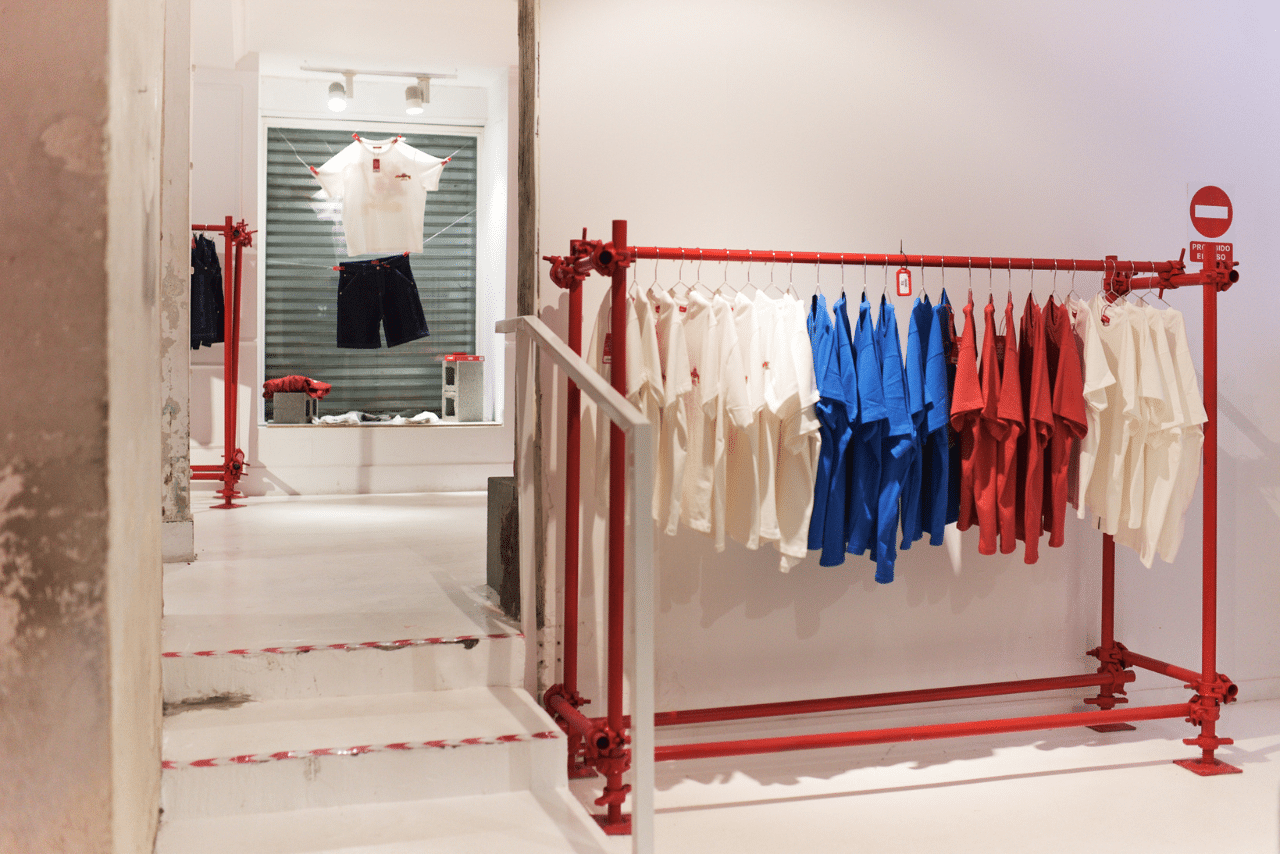
Go—PopUp already structures its London offer around two core lines that should be reflected clearly in the article: pop-up stores in London on one side, and event venues in London on the other. That makes it easier to adapt the project to the way each brand frames its need, rather than forcing everything into a single label.

Pop-up store
A pop-up store makes sense if your goal is to:
- sell
- test demand
- increase street-level visibility
- create a temporary commercial presence
Showroom
A showroom is usually the better option if your focus is on:
- buyer meetings
- press
- appointments
- a more controlled environment
- less dependence on passing footfall
Event space or brand activation venue
This is often the strongest choice when the main objective is:
- awareness
- brand experience
- content creation
- PR
- community engagement
- guest-based launches or hybrid formats
This third category is especially important for Go—PopUp, because it connects much more directly with how many brands actually express the need: not “I want a pop-up store”, but “I need to rent a space in London for a brand activation during Fashion Week.”
When should a brand start looking for a space for London Fashion Week 2026?
The short answer is: earlier than most brands expect.
The key point is not only to secure dates early, but to leave enough time to make the right decisions: area, venue type, format, production, technical requirements and negotiation margin.
If a brand wants to be well positioned for either February or September, it makes little sense to start the search at the last minute. Simple projects may still work within a shorter planning window, but if the activation includes design, production, installation or more tailored scouting, lead time matters much more.
That is why, instead of waiting too long and improvising, it usually makes more sense to start by exploring:
- pop-up stores in London
- event venues in London
- or a broader search for spaces in London
What affects the cost of an activation, showroom or event space during London Fashion Week?
There is no single price point, and treating it that way usually leads to poor decisions.
The real cost depends on factors such as:
- the area
- the duration
- the type of space
- whether the project is retail, showroom or event-led
- the level of production required
- technical needs
- staff, logistics and installation
- whether local support is needed to execute the project end to end
That is why, for many brands, the better question is not “how much does a pop-up cost in London?” but what type of space makes sense for my objective, and which format will maximise the return during Fashion Week?
What brands should plan in advance
If a brand wants to make the most of London Fashion Week 2026 from a business point of view, these are the decisions worth locking in early:
- which edition matters most: February or September
- whether the main goal is visibility, meetings, sales or activation
- whether a showroom, a pop-up store or an event space is the right format
- which London area best fits the audience and the project
- what kind of local support is needed
- what production timeline the activation requires
London does not only reward presence. It rewards precision.
Explore spaces in London for London Fashion Week 2026
The dates are clear. The next question is no longer when London Fashion Week happens, but what kind of space your brand needs to show up in London with the right commercial logic.
If you are considering a physical presence during Fashion Week, you can start by exploring:
And if you want to see how Go—PopUp approaches other major European fashion weeks, the article on Paris Fashion Week 2026 is also a useful reference point.
Featured external sources
To validate the dates, schedule and official context around London Fashion Week 2026, these are the main external references worth checking:
- British Fashion Council — the official industry body behind London Fashion Week.
- London Fashion Week official website — the main official source for event information, designers and London Fashion Week updates.
- London Fashion Week official schedule — the official page to review the event schedule and programme structure.