


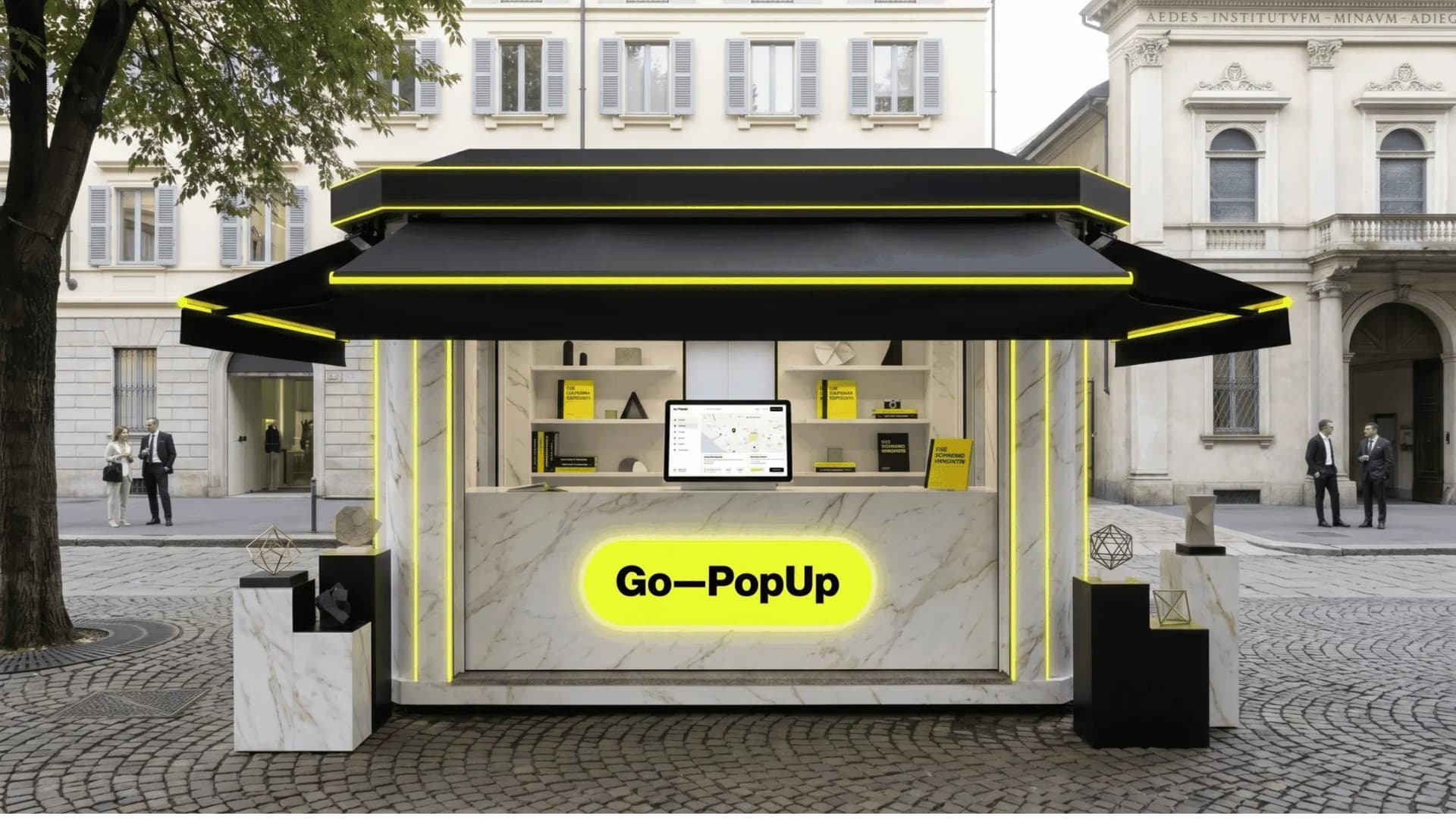
How Much Does It Cost to Set Up a Pop-Up and What Should You Plan Before Starting
Setting up a pop-up is often seen as a flexible way to bring a brand into a physical environment without taking on the structure of a permanent store. And that is precisely why many brands see it as a natural first step to test a city, launch a collection, activate a community, or generate visibility at a specific moment.
But before choosing a space or confirming dates, one question always comes up: how much does it actually cost to launch this kind of activation?
The answer depends on the format, the city, the duration, and the type of experience you want to build. Because the cost of a pop-up is not limited to renting a space: there is an operational side and a strategic side that should be clear from the beginning to avoid improvised decisions.
The Space Is Only One Part of the Budget
The first visible cost is the space rental, but it is not always the factor that has the greatest impact on the final result.
The price changes depending on several factors:
- city
- location
- square metres
- visibility
- booking duration
- type of venue
A one-week activation on a prime street does not cost the same as a two-day action in a showroom or gallery with a more experiential approach.
In many cases, choosing the right space has more impact than choosing the most expensive one.
A location aligned with the brand’s audience usually works better than a premium location with no clear commercial context.
At Go—PopUp, many brands compare different options precisely to adjust investment and objectives before making a decision.
Duration Influences More Than It Seems
Another element that significantly changes the budget is the activation period.
It is often assumed that the longer the pop-up runs, the more profitable it will be. But that is not always the case.
A short activation, well scheduled and well communicated, can generate stronger results than a longer opening with less intensity.
Before deciding on duration, it is worth asking:
- how much real capacity the brand has to activate during those days
- what commercial calendar supports the action
- whether there will be communication or community support
- whether the goal is to sell, present, or validate
Many first pop-ups work well in three-to-five-day formats because they concentrate attention and optimise resources.
Operational Costs Should Be Calculated From the Start
A common mistake in first activations is to calculate only the venue cost.
But a pop-up also involves an operational side that must be included in the budget:
- product transport
- setup and dismantling
- additional furniture if the venue does not include it
- staff for customer attention or support
- packaging
- small signage or branding elements
In some cases, the venue itself already provides part of these resources, which can significantly reduce investment.
That is why it is always worth checking what each option includes before booking.
Production Does Not Have to Be Complex
One of the biggest myths is thinking that a pop-up needs major visual production to work.
That is not always true.
Many activations perform well with a very simple setup when the product, the message, and the space are properly aligned.
The key is not to fill the space, but to make sure everything inside it has a purpose.
Before investing in production, it is useful to define:
- what kind of experience you want to create
- what visitors should remember
- what role the product plays within the journey
Sometimes fewer elements create a clearer experience.
Communication: The Cost Many Brands Forget to Anticipate
Opening a space without activating communication beforehand significantly reduces the potential of the action.
Even if the pop-up is well planned, it is advisable to reserve part of the budget to give visibility to the opening:
- social media
- email to the community
- invitations to clients
- collaborations with aligned profiles
- content before and during the activation
A large campaign is not necessary, but a minimum strategy is important so that the space does not rely only on spontaneous foot traffic.
It Is Also Worth Keeping Margin for Adjustments
In a first activation, small changes always appear:
- increasing stock
- adjusting opening hours
- solving a logistical need
- adding an unplanned element
That is why it is advisable not to close the budget too tightly.
Working with some margin allows better reactions and prevents unexpected issues from affecting the experience.
So, How Much Does It Really Cost?
There is no single figure because each activation follows a different logic.
What matters is understanding that the budget should be built around four blocks:
- space
- duration
- operations
- communication
When these four elements are clear, it becomes much easier to size the investment correctly.
Starting With a Well-Planned Activation Is More Valuable Than Oversizing
In a first pop-up, the winner is usually not the brand that invests the most.
It usually works better for the brand that understands clearly what it wants to achieve and adapts every decision to that objective.
That is why, before confirming a location, it is worth comparing real options, reviewing what each space includes, and understanding which format makes the most sense for the current stage of the brand.
At Go—PopUp, many brands start precisely this way: adjusting budget and format before booking, so the activation makes sense from the beginning.
Because a well-planned pop-up does not depend only on how much it costs.
It depends on how it is built.
 Berlin Fashion Week 2026: key dates, best areas for pop-ups and what brands should plan early
Previous
Berlin Fashion Week 2026: key dates, best areas for pop-ups and what brands should plan early
Previous
 Madrid Fashion Week 2026: key dates and where to rent a space for events, showrooms or brand activations
Next
Madrid Fashion Week 2026: key dates and where to rent a space for events, showrooms or brand activations
Next