


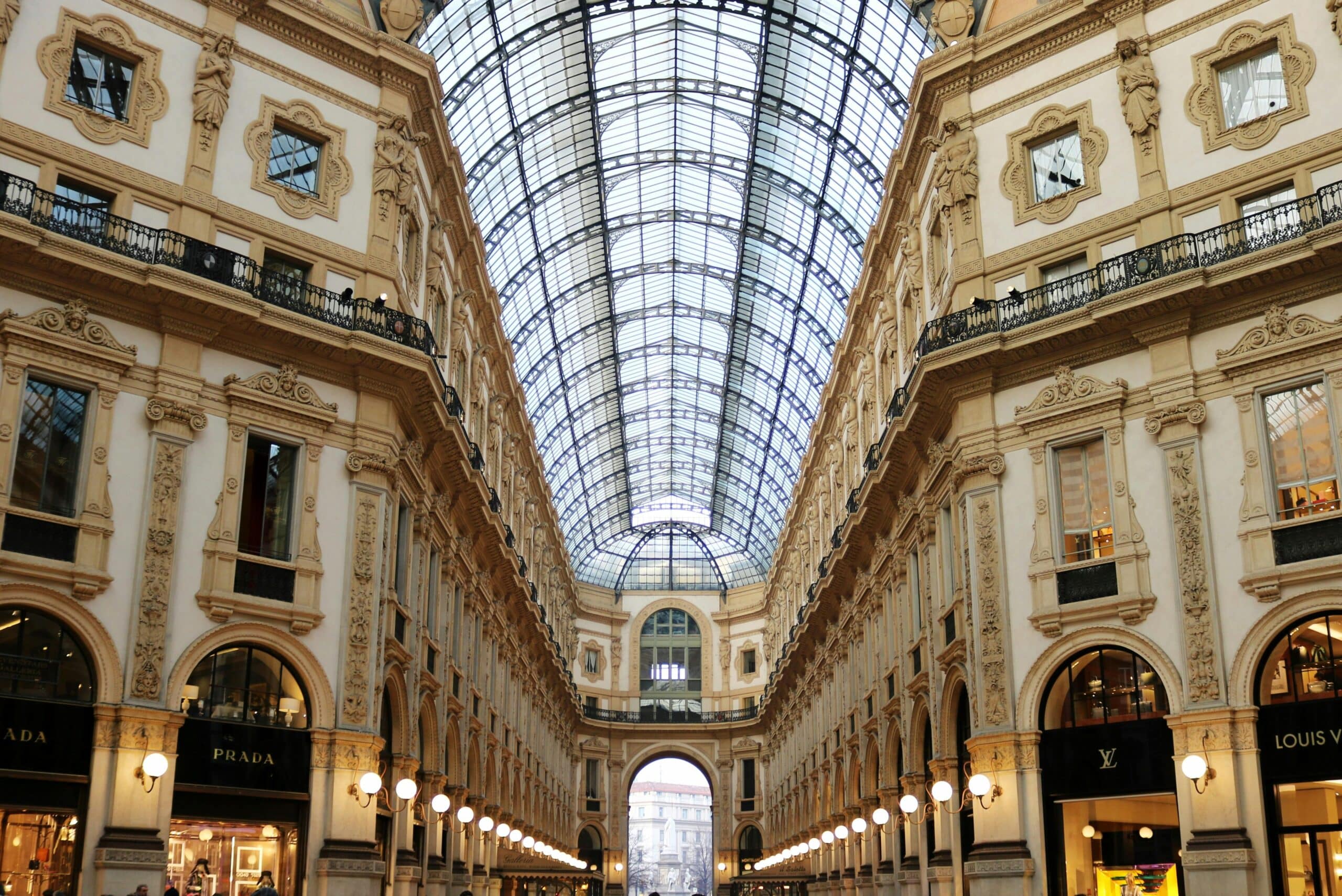
Milan Fashion Week 2026: key dates, best areas for pop-ups and what brands should plan early
Milan Fashion Week remains one of the most strategic moments of the year for brands looking to build visibility inside one of Europe’s strongest luxury retail ecosystems.
For many international brands, understanding the official calendar is only the first step. In practice, the real pressure starts earlier, when premium temporary spaces begin to narrow and district choice becomes a strategic business decision rather than simply a venue search.
If you are looking for Milan Fashion Week 2026 dates, the four main windows to monitor are January, February, June and September. For brands considering a pop-up, showroom or private activation, the real question is not only when Milan Fashion Week happens, but which edition fits the objective and how early location decisions should happen. According to the calendar published by Camera Nazionale della Moda Italiana, the women’s Fall/Winter 2026–2027 edition runs from 24 February to 2 March 2026, while the menswear Fall/Winter calendar starts earlier in January.
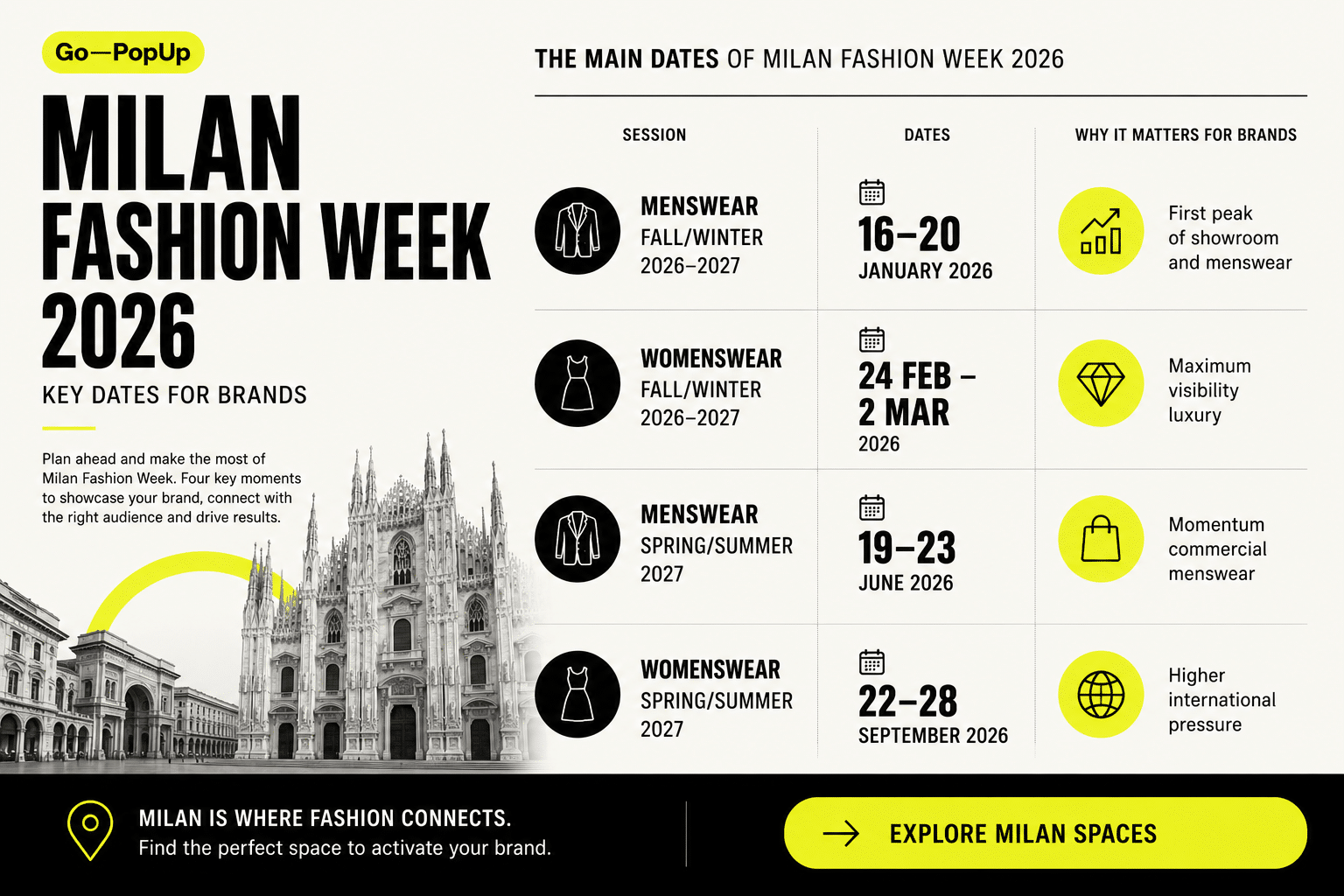
Milan Fashion Week 2026 dates at a glance
| Session | Dates | Why it matters for brands |
| Menswear Fall/Winter 2026–2027 | 16–20 January 2026 | Early menswear and showroom activity |
| Womenswear Fall/Winter 2026–2027 | 24 February–2 March 2026 | Strongest luxury visibility |
| Menswear Spring/Summer 2027 | 19–23 June 2026 | Menswear visibility and trade momentum |
| Womenswear Spring/Summer 2027 | 22–28 September 2026 | Major international retail pressure |
For many brands, February and September are the two periods that generate the strongest pressure on premium temporary retail, because they coincide with the highest concentration of international buyers, press, and luxury movement across the city.
But beyond dates, what usually makes the difference is understanding how Milan actually moves during those days and which districts create the right reading for each project.
Why Milan Fashion Week matters beyond the official calendar
Milan behaves differently from many fashion capitals.
The city concentrates buyers, luxury groups, media attention and showroom activity in a much more district-driven way than Paris or London. This means temporary retail decisions often depend less on the calendar itself and more on whether the brand wants luxury visibility, wholesale proximity, cultural positioning or market testing.
A well-positioned activation during Milan Fashion Week can support very different objectives:
- strengthen luxury perception
- host selective appointments
- create press relevance
- test local demand inside one of Europe’s most concentrated luxury retail environments
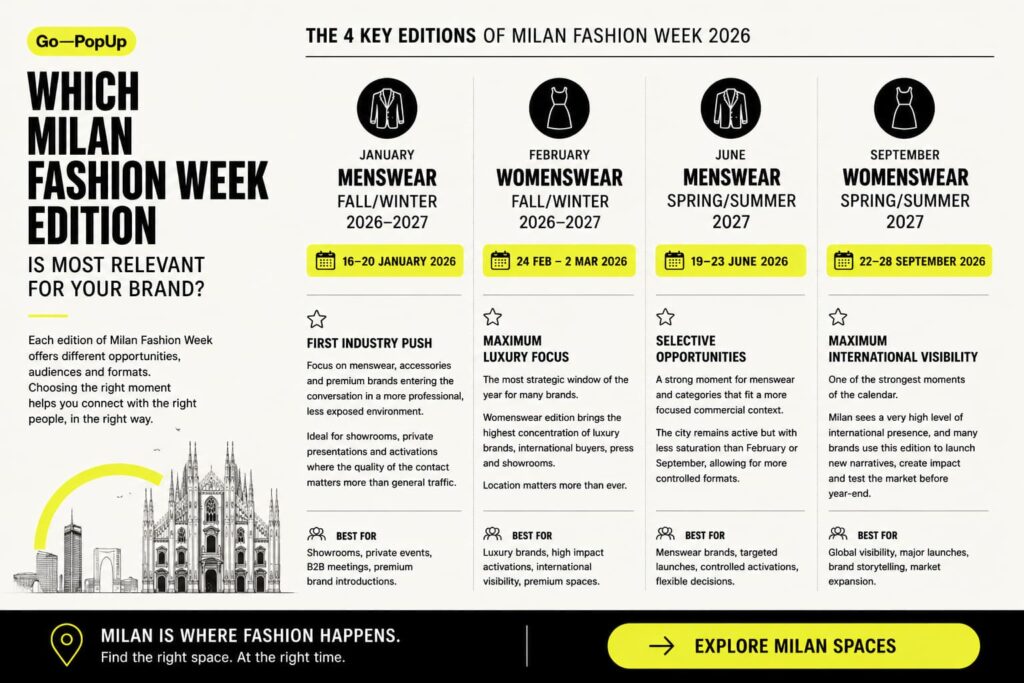
Which Milan Fashion Week session is most relevant for your brand?
Not every Milan Fashion Week edition creates the same type of opportunity or responds to the same brand objective.
Although the official calendar defines four key moments each year, in practice each edition activates a different city dynamic: attendee profiles change, pressure shifts across districts, and the formats that perform best also vary.
For brands seeking visibility, commercial meetings or a first activation in Milan, understanding these differences is often more useful than simply looking at dates.
January: menswear and early industry momentum
January usually concentrates brands linked to menswear, accessories and premium positioning that want to enter the conversation within a more professional environment and with less public exposure.
It is particularly relevant for showroom formats, private presentations or activations where contact quality matters more than city-wide traffic.
February: the strongest luxury concentration
For many brands, February remains the most strategic window of the year in Milan.
The womenswear edition gathers the city’s highest level of luxury activity: international buyers, specialised press, showrooms, major fashion houses and significantly higher pressure on premium spaces in the most requested districts.
Here, district choice becomes far more decisive, because small differences in location can completely change how an activation is perceived.
June: menswear and selective activation timing
June often works well for menswear-oriented brands or categories that fit better within a more controlled commercial context.
The city remains active, but with a less saturated reading than February or September, which in some cases allows more controlled formats or slightly more flexible decisions.
September: strongest global retail momentum
September returns as one of the strongest moments of the calendar.
The city recovers very high international concentration, and many brands use this edition to launch new narratives, generate impact before year-end, or test presence within one of Europe’s most visible luxury ecosystems.
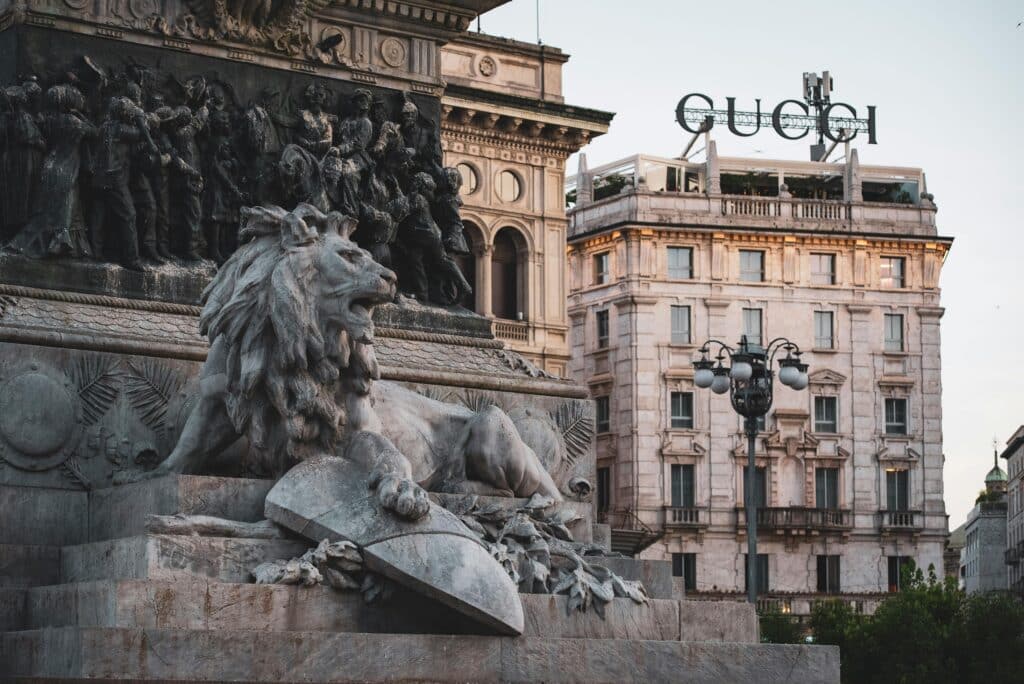
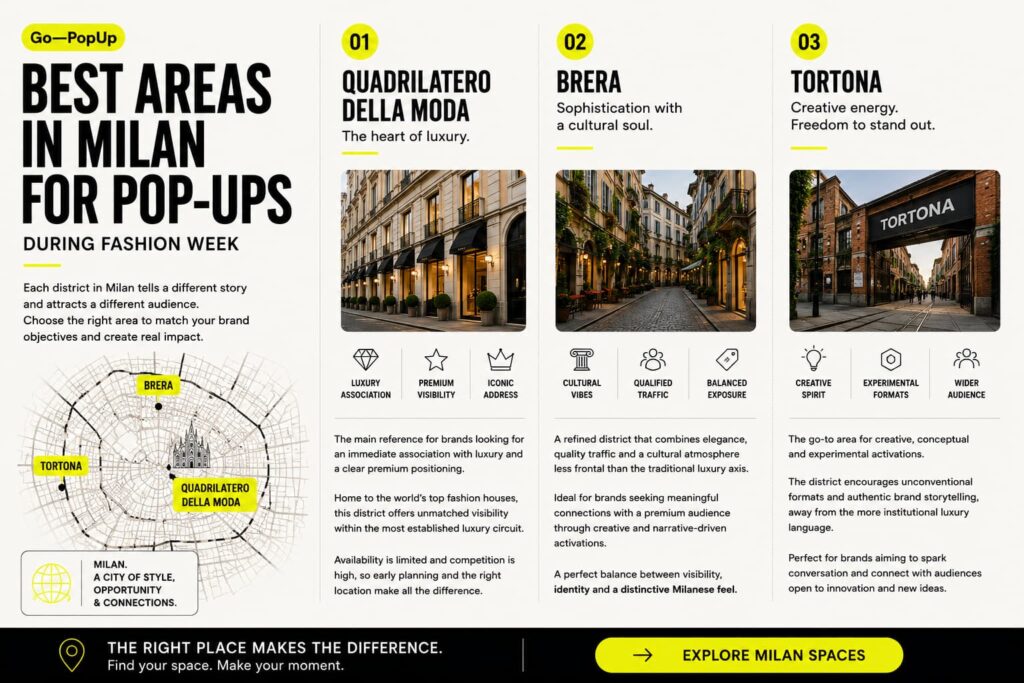
Best Milan areas for pop-ups during Fashion Week
Choosing Milan well is rarely about choosing the most famous address. It is about matching the district with the objective.
Quadrilatero della Moda
It remains the main reference for brands seeking immediate luxury association and a very clear premium reading from the first moment.
During Milan Fashion Week, very few areas create such a direct positioning effect. The district concentrates some of the most recognised names in fashion, and the urban context itself becomes part of the message any activation sends.
For brands needing prestige, visibility or proximity to Milan’s most established luxury circuit, Quadrilatero is usually the most obvious option. Precisely because of that, premium availability reduces earlier here than anywhere else.
Brera
Brera works particularly well when a brand seeks sophistication, qualified traffic and a cultural reading that is less direct than the traditional luxury axis.
It is an area with a highly recognisable Milan identity and often attractive for projects wanting premium audiences without relying only on classic luxury codes.
Many brands find here a strong balance between visibility, quality surroundings and a narrative atmosphere.
Tortona
Tortona fits better with creative, conceptual or experimental activations.
It is an area where less conventional formats work naturally, and where many brands find more freedom to build experiences with their own personality.
During fashion week, it often attracts projects prioritising storytelling, differentiation and contemporary relevance.
Showroom-led alternatives depending on your objective
Some brands should not prioritise storefront visibility first.
If appointments, buyers or selective meetings matter more, a showroom-led setup in the right district often performs better than a visible retail frontage.
| Zona | Ideal para | Perfil |
| Quadrilatero | lujo inmediato | premium |
| Brera | posicionamiento cultural | sofisticado |
| Tortona | creatividad | experimental |
Best district comparison
| Area | Ideal for | Profile |
|---|---|---|
| Quadrilatero | immediate luxury | premium |
| Brera | cultural positioning | sophisticated |
| Tortona | creativity | experimental |
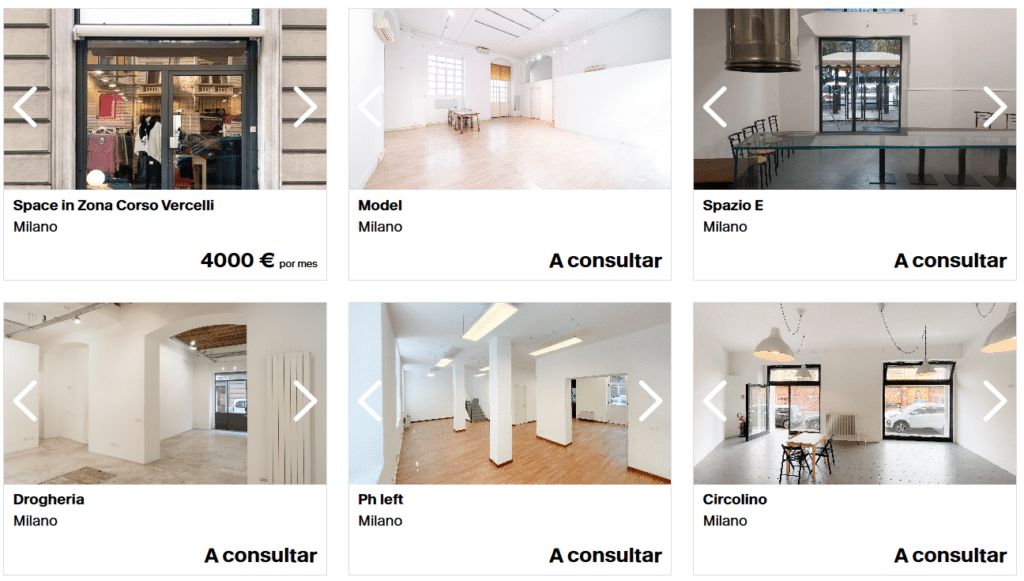
Explore Milan spaces for Fashion Week activations
If your project is already moving from research to execution, comparing real spaces early usually creates better decisions than waiting until calendars feel close.
Suggested collections:
Popup store, showroom or private activation: what format fits your objective?
| Brand objective | Best format |
| Luxury visibility | Pop-up |
| Buyer meetings | Showroom |
| Press activation | Private venue |
| Market entry | Flexible short-term retail |
A common mistake is choosing the format after choosing the city. In Milan, the format often determines which district truly makes sense.
How early should brands secure a space for Milan Fashion Week 2026?
The strongest districts usually tighten earlier than many brands expect.
The most strategic spaces are rarely selected once official schedules feel close. They are secured once brands define objective, budget, activation format and preferred district.
This becomes especially visible in February and September.
What brands often underestimate when planning Milan Fashion Week
Milan is more compact than Paris in retail geography.
That means choosing the wrong district usually has more impact on how the activation is perceived.
The stronger approach is to define first:
- whether the goal is visibility or selective interaction
- whether the format should be public or appointment-led
- whether luxury association matters more than traffic volume
Why local execution matters in Milan
A successful Milan activation rarely depends only on finding a venue.
Production timing, local logistics, installation windows and technical adaptation often determine whether the activation truly works.
Planning a Milan Fashion Week activation in 2026
The activations that tend to work best during Milan Fashion Week are rarely decided once the official schedule is announced. By that point, many of the most strategic opportunities in the city are already being evaluated, reserved or shaped around very specific brand needs.
In Milan, choosing the right space is usually less about availability and more about understanding which area supports the kind of visibility, audience and positioning the project needs.
Some brands prioritise central fashion districts close to showrooms and buyer traffic. Others look for neighbourhoods where a pop-up can generate stronger cultural relevance or local attention during the week.
That is why one of the most useful decisions at this stage is not waiting for the final calendar, but starting to compare real options early and understanding which part of Milan fits the project best.
If you are already exploring possibilities, a practical first step is reviewing available options here:
Visit our marketplace for event spaces in Milan
And if the project involves more than securing a venue — for example local production, permits, staffing or activation support — it usually makes sense to define this from the beginning, especially in a city where demand concentrates quickly around key dates.
If you are also considering other key fashion weeks in Europe, it may be useful to look at how Paris Fashion Week works in practice, especially in terms of timing, district choice and short-term activation pressure.
FAQ: Milan Fashion Week 2026 for brands
When is Milan Fashion Week 2026?
The main windows brands usually follow are January, February, June and September.
January and June are more menswear-driven.
February and September concentrate womenswear editions with stronger international pressure.
Which edition usually works best for a pop-up?
February and September are usually the strongest windows for visibility.
These weeks gather significantly more buyers, press and luxury traffic.
When should brands start planning?
The earlier the better, especially if the project targets a specific premium area.
The best opportunities rarely appear late.
Is showroom or pop-up better?
It depends on the brand objective.
A pop-up usually works better for public visibility.
A showroom tends to be more efficient for buyer meetings and controlled presentations.
Useful references and further reading
If you want to explore Milan Fashion Week further and understand how the official calendar works in Italy, these are reliable sources:
Official website of Camera Nazionale della Moda Italiana:
https://www.cameramoda.it/en/
Official Milan Fashion Week calendar:
https://www.cameramoda.it/en/associazione/calendario/
Historical overview of Milan Fashion Week:
https://en.wikipedia.org/wiki/Milan_Fashion_Week
 Madrid Fashion Week 2026: key dates and where to rent a space for events, showrooms or brand activations
Previous
Madrid Fashion Week 2026: key dates and where to rent a space for events, showrooms or brand activations
Previous
 Succes Stories | Milfshakes Pop Up Store
Next
Succes Stories | Milfshakes Pop Up Store
Next